
Understanding the Truth About Cannabis and Eye Pressure

Why Do Some People Think Marijuana Helps Glaucoma?
Since the 1970s, studies have shown that smoking marijuana or using products containing THC (tetrahydrocannabinol) can temporarily lower eye pressure. Because high intraocular pressure (IOP) is a major risk factor for glaucoma, this led to the belief that cannabis could be used to treat the disease.
However, the effect of THC on eye pressure only lasts about 3 to 4 hours. Glaucoma is a 24-hour-a-day, 7-day-a-week disease, which means you'd have to use marijuana around the clock, an approach that's neither practical nor safe. There are no benefits of marijuana on regular glaucoma management.
What Are THC and CBD?
THC is the main psychoactive compound in marijuana, it's what causes the "high." CBD (cannabidiol) is non-intoxicating and is often marketed for relaxation, pain, or anxiety relief. Both compounds interact with the body's endocannabinoid system, which helps regulate many functions, including how fluid drains from the eye.
Do We Have Cannabinoid Receptors in the Eye?
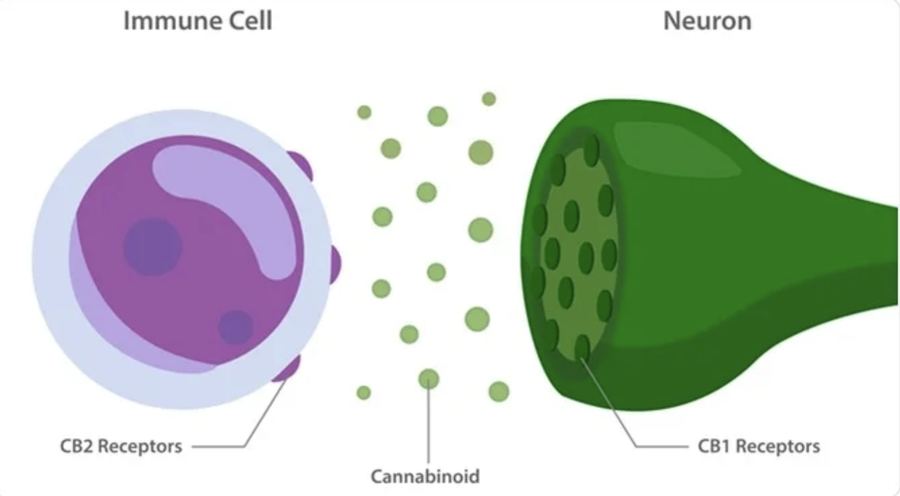
Yes. The eye contains CB1 receptors (a type of cannabinoid receptor) in the ciliary body, retina, cornea, and trabecular meshwork. When activated by THC, these receptors can modestly reduce eye pressure, but only for a few hours. CBD, on the other hand, interacts differently and may block these receptors or even raise eye pressure.
What Does the Clinical Research Say?
THC can lower eye pressure for a few hours but requires frequent dosing. It can also cause drowsiness, dizziness, mood changes, and lower blood pressure, which can actually reduce blood flow to the optic nerve, overall, not a good way to manage glaucoma.
CBD does not lower eye pressure. In some human and animal studies, it has increased IOP.
There is no lasting benefit: no scientific evidence shows that cannabis prevents vision loss or slows glaucoma progression.

Why THC and CBD Are Not Good Treatments for Glaucoma
They are too short-acting: glaucoma requires continuous eye pressure control, and THC's effect fades in a few hours. There are side effects: THC affects mood, coordination, and blood pressure, which can interfere with safe, consistent glaucoma care. CBD may raise pressure, worsening the very problem it's being used for. There is no proven protection: cannabis has never been shown to protect the optic nerve or preserve vision. Better options exist: today's prescription eye drops, selective laser trabeculoplasty (SLT), and minimally invasive glaucoma surgery (MIGS) provide safe, long-lasting results with proven outcomes.
Can Future Eye Drops Use the Body's "Cannabis System" to Treat Glaucoma?
Scientists have long known that cannabinoid receptors, the same ones that respond to compounds in marijuana, exist naturally in the human eye. These receptors (called CB1 and CB2) are found in key areas of the eye such as the ciliary body, trabecular meshwork, and retina, all of which help control eye pressure and protect nerve cells.
Modern drug developers are trying to capture the potential eye-pressure-lowering effect of cannabinoids without the "high." These experimental eye drops contain synthetic compounds that directly target the eye's cannabinoid receptors or related pathways (such as GPR18, a receptor linked to eye-pressure control).
The most advanced example was a medication called SBI-100 Ophthalmic Emulsion, designed to act on CB1 receptors in the eye. It was tested in early human studies and showed good safety and a small hint of pressure lowering. However, a larger 2024 clinical trial found no meaningful pressure-lowering effect, and the program was discontinued. This highlights the challenge of delivering enough of these compounds into the eye while avoiding systemic absorption or irritation.
Where the Science Is Going Next
Even though the first generation of cannabinoid-mimicking drops didn't succeed, research is still active in several directions: new receptor targets such as GPR18 and TRPV1, other "cannabinoid-like" receptors that may regulate eye pressure more effectively than CB1; neuroprotection, since some lab studies show cannabinoids might help protect retinal ganglion cells (still experimental and not yet proven in humans); and better delivery systems, with nano-formulations and prodrugs being tested to improve corneal penetration and long-lasting effects, a major hurdle for all topical glaucoma therapies.
What This Means for Glaucoma Patients Today
No FDA-approved eye drop uses cannabinoid pathways to treat glaucoma. The standard of care, prescription drops, laser trabeculoplasty (SLT), and minimally invasive glaucoma surgeries (MIGS), remains the safest and most effective way to protect your vision. Research continues, and your eye doctor stays informed about these developments. If cannabinoid-based treatments ever prove safe and effective, they could become part of future glaucoma care.
What Do Eye Experts Say?
American Glaucoma Society: cannabis is not recommended for glaucoma. American Academy of Ophthalmology: marijuana is not an effective long-term treatment and has too many side effects. National Eye Institute: research has not found marijuana or CBD to be a practical or safe glaucoma therapy.
The Bottom Line
While cannabis and CBD are popular for many health claims, they are not safe or effective treatments for glaucoma. If you have glaucoma or high eye pressure, talk with our board-certified ophthalmologists about modern, evidence-based treatments that work safely around the clock. At Inland Glaucoma Center, we specialize in comprehensive glaucoma evaluations, advanced laser therapy (SLT), minimally invasive glaucoma surgeries (MIGS), and ongoing management for all types of glaucoma. Your eye health is too important to experiment with unproven remedies.
FAQ: Cannabis, CBD, and Glaucoma
Does smoking marijuana help my eye pressure? It may lower pressure for a few hours, but you'd need to use it 6-8 times per day for continuous effect, making it unsafe and impractical. Fluctuations in eye pressure have also been shown to make glaucoma damage worse.
Can CBD oil help my glaucoma? No. In fact, studies show that CBD can raise eye pressure in some people.
Are there eye drops that contain THC or CBD? Not currently. Cannabinoids don't penetrate the cornea well and often cause irritation. No FDA-approved eye drops with THC or CBD exist for glaucoma.
Can cannabis protect the optic nerve or improve vision? No scientific studies support that. Lowering IOP through standard treatments remains the only proven way to prevent vision loss from glaucoma.
Is medical marijuana ever prescribed for glaucoma? Most ophthalmologists, including those at Inland Glaucoma Center, do not recommend it. Safer, longer-acting options are available.
I already use marijuana for other reasons. Should I stop? If you use cannabis for non-ocular reasons, tell your eye doctor. It's important that we understand any medications or substances you use, since they can affect eye pressure and treatment response.
References
- Alnawaiseh M, Mursch-Edlmayr AS, Toma HS, et al. Cannabinoids for the Treatment of Glaucoma: A Review. 2023. American Glaucoma Society. Position statement: marijuana and the treatment of glaucoma. J Glaucoma. 2010;19(2):75-76. Azuara-Blanco A, Tomida I, House H, Flint M, Pertwee RG, Robson PJ. Effect of sublingual application of cannabinoids on intraocular pressure. J Glaucoma. 2006;15(5):349-353. Bazan NG, et al. Cannabidiol Signaling in the Eye and Its Potential as an Ocular Therapeutic. 2022. Chen X, Mroszczyk K, et al. THC and Cannabidiol Differentially Regulate Intraocular Pressure via CB1 and GPR18 in Mice. 2018. Hepler RS, Frank IR. Marihuana smoking and intraocular pressure. JAMA. 1971;217:1392. Merritt JC, Crawford WJ, Alexander PC, et al. Effect of marihuana on intraocular and blood pressure in glaucoma. Ophthalmology. 1980;87:222-228. Mosaed S, Smith AK, Liu JHK, et al. The relationship between plasma tetrahydrocannabinol levels and intraocular pressure in healthy adult subjects. Front Med. 2022. American Academy of Ophthalmology. Does Marijuana Help Treat Glaucoma or Other Eye Conditions? EyeWiki. Cannabinoids for Glaucoma. </content>