
Narrow-Angle Glaucoma: Understanding the Condition
A narrowed drainage angle can impede the eye’s natural fluid outflow and, in some cases, close suddenly, a true ocular emergency. Here’s how normal, narrow, and closed angles differ, and how we diagnose and treat this condition.
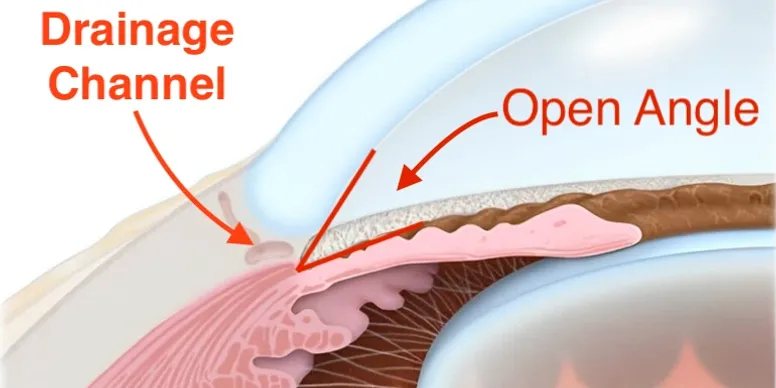
This Is a Normal Angle
This is an image of a normal ocular angle. The angle is crucial because it serves as the primary pathway for fluid drainage in the eye. Fluid from the front part of the eye drains into the angle and then through the trabecular meshwork, which acts as a filter. This process is vital in preventing conditions such as angle closure. The fluid then escapes out of veins near the white of the eye, ensuring proper ocular health.
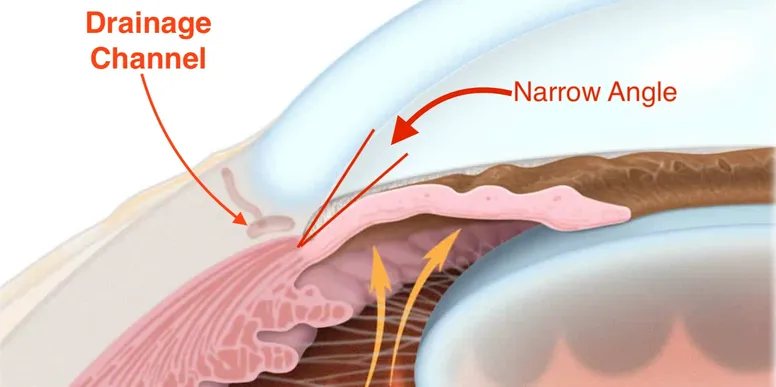
Narrow Angles
In eyes with smaller diameters or those affected by cataract progression, the angle can become narrower, which may impede fluid flow. This condition can present symptoms or remain asymptomatic. The primary concern with narrow angles is their potential to lead to angle closure, which can occur suddenly. Factors such as medication or high emotional stress can trigger the transition from a narrow angle to a closed angle.
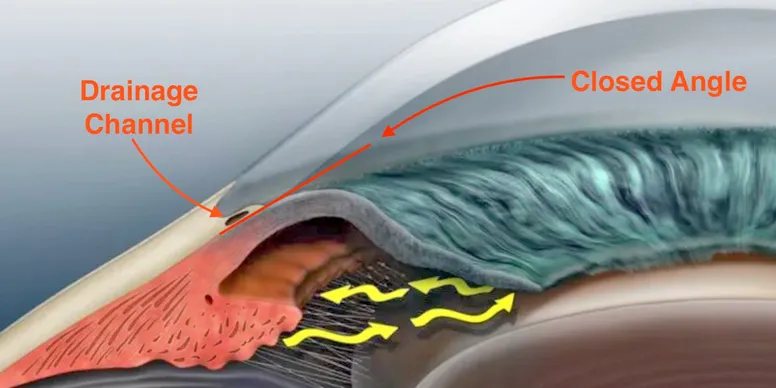
Angle Closure or Closed Angle
A closed angle, also known as angle closure, is an ocular emergency. The pressure in the eye can rise to dangerous levels, potentially cutting off circulation and leading to permanent vision loss, vomiting, and severe eye pain. If you experience symptoms associated with this condition, seek immediate care by calling 911 or visiting an ophthalmologist right away.
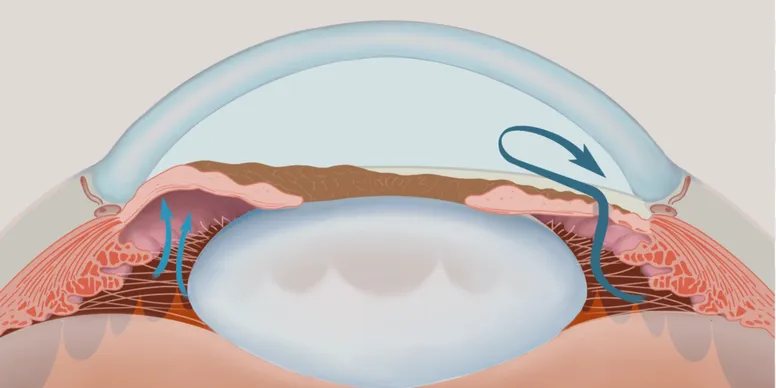
Treatment: Laser Iridotomy
For those with critically narrow angles, a small hole in the iris can be created using a laser as part of glaucoma treatment. This procedure allows fluid in the eye to circulate better, thereby decreasing the risk of an angle-closure attack. Your eye doctor can review the risks and benefits of this approach.
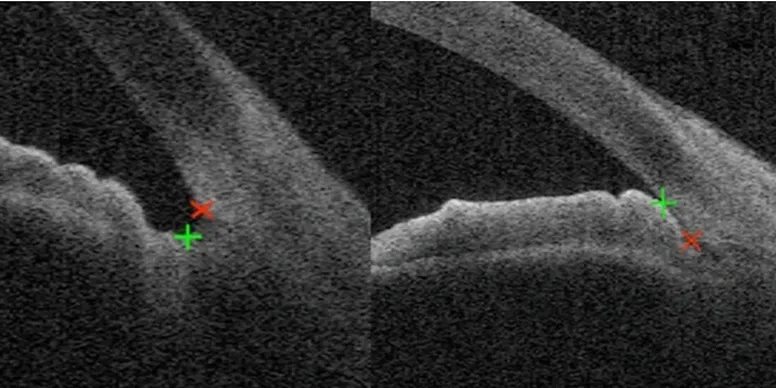
Ocular Imaging: OCT & Gonioscopy
At Inland Glaucoma Center, we provide advanced ocular imaging with OCT, which offers a high-resolution 3D view similar to an MRI of the angle, helping to assess the precise risk of developing angle closure. We also utilize gonioscopy with a mirrored lens, which remains the gold standard in evaluating narrow angles and angle closure.

Symptoms & Risk Factors
Symptoms of angle-closure glaucoma are usually absent but can include transient blurred vision, halos around lights, mild eye pain, headache, and occasionally nausea. Risk factors include older age, female gender, Asian or Inuit ancestry, farsightedness (hyperopia, often associated with narrower angles), and a family history of glaucoma.
See a Glaucoma Expert

At Inland Glaucoma Center, we have a UCLA fellowship-trained glaucoma specialist who is Harvard educated and board certified in ophthalmology. This dedicated MD focuses on glaucoma treatment, particularly in cases involving narrow angles, angle closure, and complex glaucoma surgery.
Frequently Asked Questions
What is narrow-angle glaucoma?
Narrow-angle glaucoma occurs when the drainage angle of the eye becomes narrower than normal, which can impede fluid outflow. It may be asymptomatic or cause symptoms, and its main concern is the risk of progressing to angle closure, which can happen suddenly.
Is angle closure a medical emergency?
Yes. A closed angle (angle closure) is an ocular emergency. Eye pressure can rise to dangerous levels, potentially leading to permanent vision loss, severe eye pain, and vomiting. Seek immediate care by calling 911 or visiting an ophthalmologist right away.
How is narrow-angle glaucoma treated?
For critically narrow angles, a laser peripheral iridotomy can be performed, creating a small hole in the iris so fluid circulates more freely, decreasing the risk of an angle-closure attack.
What are the risk factors for angle-closure glaucoma?
Risk factors include older age, female gender, Asian or Inuit ancestry, farsightedness (hyperopia), and a family history of glaucoma.
Think you may have narrow angles? Early evaluation with OCT and gonioscopy can determine your risk and prevent an emergency.